
.jpg)
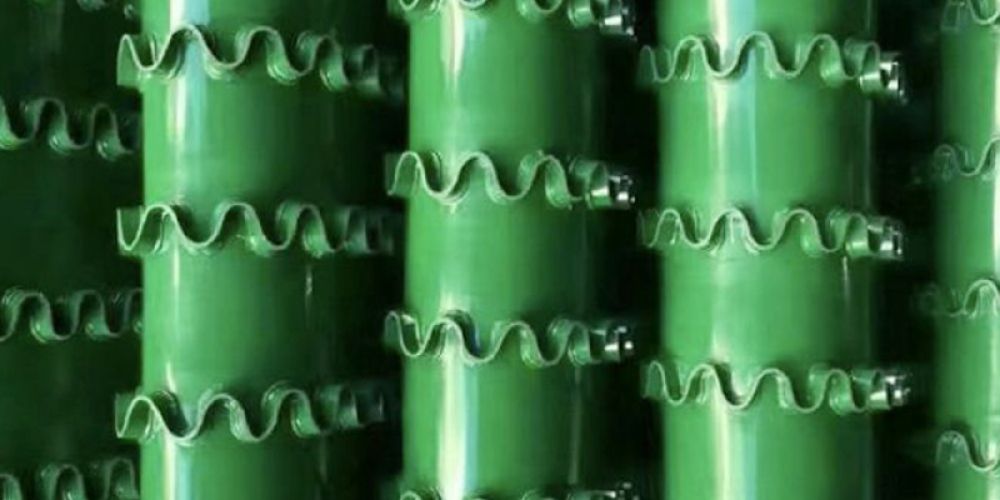
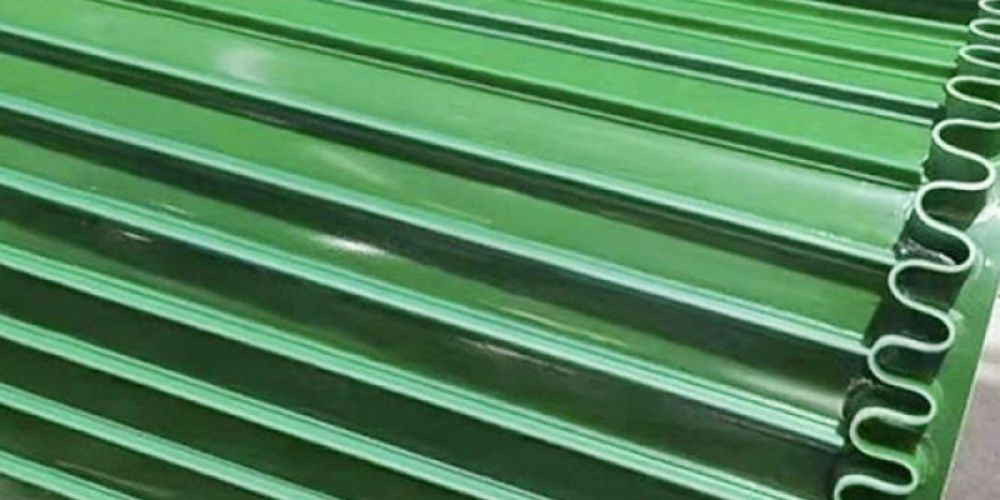
Skirted baffle conveyor belts are a special type of conveyor belt that combines the functions of a skirt and baffles. These belts typically use high-strength, wear-resistant canvas or polyester fabric as the load-bearing surface, and are equipped with different skirts and baffles to achieve various conveying effects.
I. Features of Skirted Baffle Conveyor Belts
1. Skirt Design: One of the main features of skirted baffle conveyor belts is their skirt design. The skirt prevents materials from falling off during transport and increases the adhesion of materials to the conveyor belt, which is beneficial for stable material transport. At the same time, the skirt also provides a certain degree of protection, reducing wear and tear on the conveyor belt.
2. Baffle Selection: Skirted baffle conveyor belts offer a variety of baffle options to suit different needs. Common baffle types include straight baffles, curved baffles, and adjustable baffles. Straight baffles prevent material spillage during transport, curved baffles better accommodate materials of different shapes, and adjustable baffles allow for angle adjustment to achieve directional material transport.
3. Wide Applicability: Skirted baffle conveyor belts are suitable for conveying various bulk materials, such as coal, ore, sand, fertilizer, and grain. Their unique design better adapts to the characteristics of different materials, improving conveying efficiency.
4. Easy Maintenance: Skirted baffle conveyor belts are relatively easy to maintain. Regular checks of belt wear are necessary, with timely replacement of severely worn parts and keeping the belt clean.
Different types of conveyor belts have different characteristics and applications. Choosing the right conveyor belt can improve production efficiency, reduce costs, and ensure production stability and reliability. Furthermore, proper maintenance and upkeep are crucial when using conveyor belts, including timely replacement of worn parts to maintain their good condition.
II. Functions of Skirt Design in Skirted Conveyor Belts
1. Prevents material slippage during conveying: The skirt design increases the friction between the material and the conveyor belt, allowing the material to adhere better and preventing slippage due to excessive tilt angle or speed.
2. Protects the conveyor belt: The skirt design protects the conveyor belt from direct impact and friction from materials and debris, reducing wear and damage and extending its service life.
3. Controls material width: By adjusting the width and tilt angle of the skirt, the width of the material can be controlled, enabling directional conveying and diversion.
4. Improves conveying efficiency: The skirt design makes the material more stable during conveying, reducing spillage and accumulation, and improving conveying efficiency.
Skirted baffle conveyor belts are a special type o…
.jpg)
Polyurethane (PU) conveyor belts possess numerous …
The safety of conveyor belt materials in the food …
Lightweight conveyor belts are a type of conveyor …
