
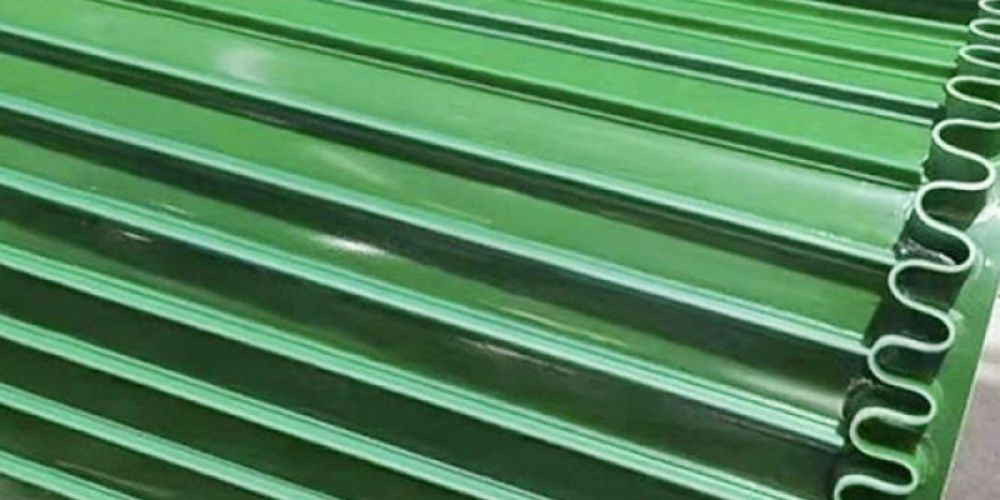
Lightweight conveyor belts are a type of conveyor belt made of relatively light materials. They come in various materials, including PVC and PU belts. Each material has its own characteristics and applications, requiring selection based on specific application scenarios and requirements.
1. PVC conveyor belts are made from polyvinyl chloride and are characterized by their light weight, good wear resistance, and smooth, easy-to-clean surface. They are widely used in food processing, pharmaceuticals, and light industry.
2. PU conveyor belts are made from polyurethane and possess excellent strength and wear resistance. They can withstand high tension and high-speed transport, making them suitable for industries such as electronics, automotive, and machinery manufacturing.
In addition to the above materials, there are some special materials, such as silicone conveyor belts which can withstand temperatures up to 200℃, and Teflon conveyor belts which have excellent high-temperature resistance and can withstand extremely high temperatures, making them suitable for high-temperature environments. Choosing the appropriate conveyor belt material requires consideration of specific application scenarios and requirements, including the conveying environment, material characteristics, conveying speed and distance, belt wear resistance, temperature resistance, and corrosion resistance.
Lightweight conveyor belts can be customized in various thicknesses according to user needs. When using them, please note the following:
1. Correct Installation: Whether the conveyor belt interface rotates in the forward or reverse direction depends on the machine's operating conditions. For surfaces with scrapers or brushes, consider rotating in the same direction as the surface. For surfaces without working surfaces, consider rotating in the reverse direction. For inlet belts, toothed interfaces are non-directional, and the overlap is the same as above.
2. Correct Alignment: The frame material is generally composed of iron or aluminum alloy, while the conveyor belt is composed of fiber materials such as rubber, plastic, or PVC.
3. Strength Adjustment: Although forced stretching is implemented during fiber weaving and product vulcanization and plasticizing, there is a shrinkage process after the product is finished. This shrinkage process will still extend during use. Therefore, the initial adjustment should not be too tight. After running for 3-5 days or about 40 hours, adjust to the optimal operating state, at which point the internal stress distribution of the belt will be uniform.
.jpg)
Skirted baffle conveyor belts are a special type o…
.jpg)
Polyurethane (PU) conveyor belts possess numerous …
The safety of conveyor belt materials in the food …
Lightweight conveyor belts are a type of conveyor …
