BLOGS

All Blogs

The key role of skirted baffles in material transportation: anti-spillage and guiding design

I. Spillage Prevention: Optimizing Efficiency and Cost

1. Physical Barrier Design

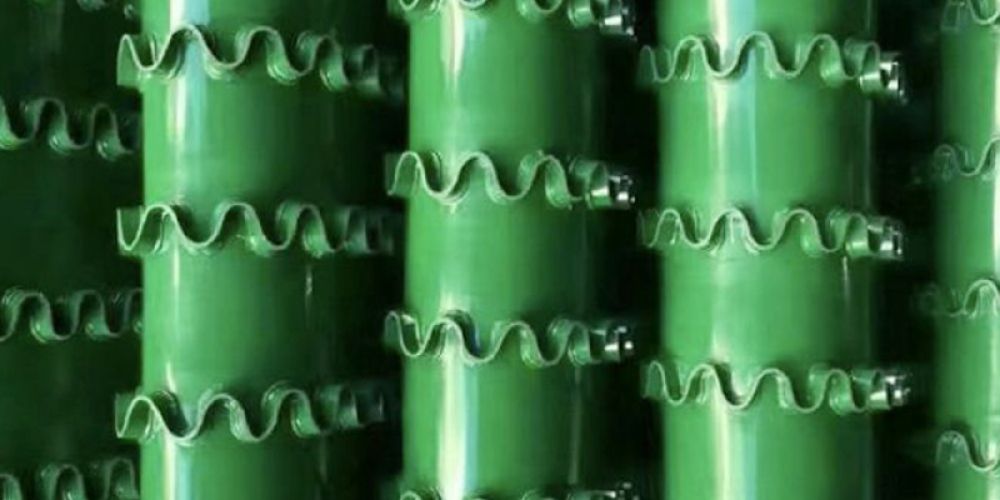
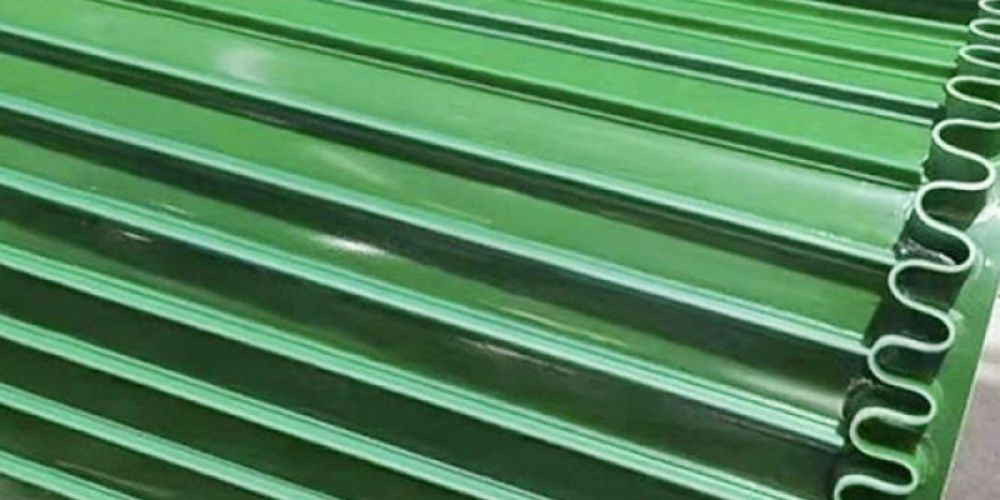
  • Vertical Sidewalls: Flexible flanged skirts (height: 10–300 mm) made of PVC, PU, or rubber form enclosed channels with the belt, resisting material spillage caused by centrifugal force, vibration, or inclines.

2. Field-Tested Applications

  • Grain Processing:
    • For wheat, corn, etc.: Skirt height ≥50 mm (accommodating granule size variations) + baffle spacing ≤150 mm → spillage rate <0.5%.
  • Chemical Powders:
    • Seamlessly welded PU skirts paired with negative pressure suction systems prevent leaks of alumina, calcium carbonate, etc.
  • Mining Operations:
    • Thickened rubber skirts (≥8 mm thickness) with embedded steel reinforcement withstand impact loads >200 kg/m&sup2;, reducing ore splatter losses.

II. Material Guiding: Precision Flow Control

1. Adjustable Guidance Mechanisms

  • Angle Modulation:
    • Baffles and skirts with hinge/bolt adjustments (0°–45° inclination), e.g., 15° tilted baffles direct bulk goods to sorting ports.
  • Zoned Layout:
    • Dense Baffles (spacing ≤100 mm) in front sections concentrate materials; gradual widening (up to 300 mm) in rear sections prevents compaction.

2. Specialized Baffle Designs

  • Corrugated Baffles:
    • Minimize material buildup in sticky loads (wet coal, mineral slurries).
  • V-Shaped Baffles:
    • Centralize materials in bidirectional systems via V-shaped openings, eliminating side spillage.