BLOGS

All Blogs

What are the common types of conveyor belts

Types of Conveyor Belts
Conveyor belts come in various types, each designed for specific materials and working environments. Below are common types:


1. General-Purpose Conveyor Belt

  • Applications: Transports non-corrosive, non-abrasive bulk materials (e.g., coal, coke, sand, cement) or packaged goods at room temperature.

2. Corrugated Sidewall Conveyor Belt

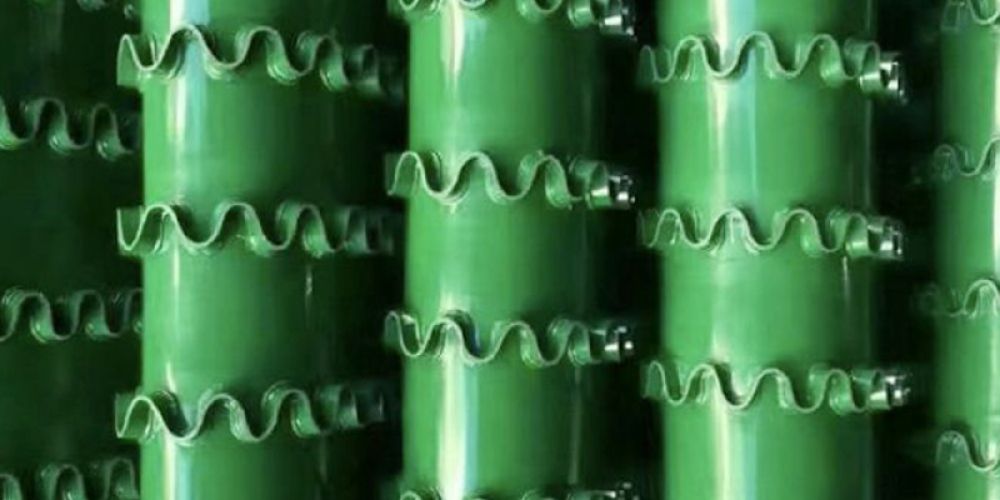
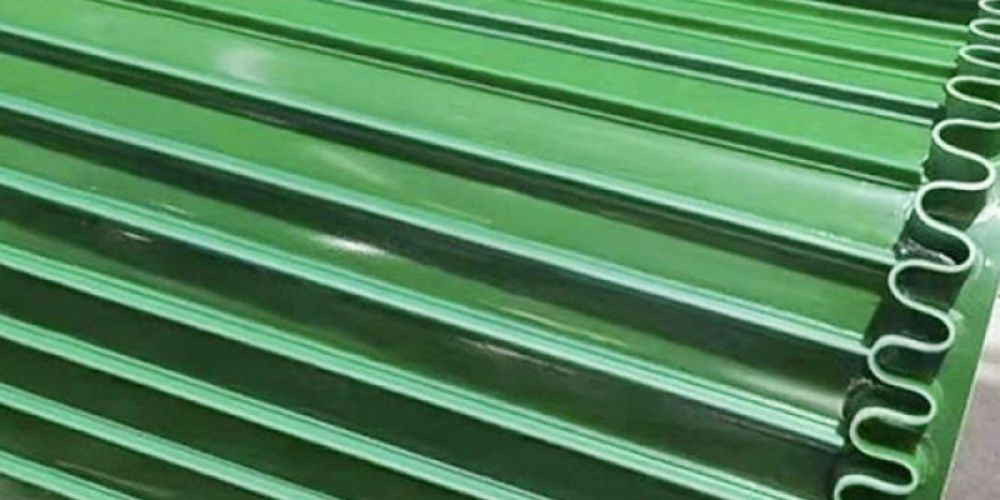
  • Structure: Composed of a base belt, sidewalls, and transverse ribs.
  • Applications: Ideal for powdery, granular, small bulk, or viscous materials prone to spillage.
  • Advantages: Compact design, flexible layout, rapid installation, low maintenance, energy efficiency, high strength, and long service life.

3. Patterned Anti-Skid Conveyor Belt

  • Features: Textured surface (herringbone, chevron, fishbone, or dotted patterns) prevents material slippage.
  • Applications: Suitable for small to medium-sized bulk, granular, or powdered materials. Excels in high-speed, long-distance, and high-impact transportation.

4. Heat-Resistant Conveyor Belt

  • Applications: Transports high-temperature materials (e.g., sintered ore, hot coke, cement clinker, hot castings).
  • Construction: Customized materials enhance heat resistance based on temperature grades.

5. Polyester (EP) Conveyor Belt

  • Aliases: EP belt, wear-resistant belt, cement belt.
  • Advantages: High modulus, low elongation, thermal stability, and impact resistance.
  • Applications: Medium-to-long distance, heavy-load, high-speed transport in coal, mining, ports, metallurgy, energy, and chemical industries.

6. Flame-Resistant Steel Cord Conveyor Belt

  • Structure: Steel cord-reinforced rubber with flame-retardant layers.
  • Advantages: High tensile strength, impact resistance, low elongation, excellent troughability, and flexibility.
  • Applications: Long-distance, large-capacity, high-speed transport in coal, mining, ports, metallurgy, energy, and chemical sectors.

7. Endless (Loop) Conveyor Belt

  • Features: Seamless, jointless design ensures smooth operation, uniform tension, minimal elongation, and precise alignment.

8. Smooth Lightweight Conveyor Belt

  • Structure: Made from high-strength cotton, nylon, or polyester fabric with natural PVC coating (white/light-colored).
  • Advantages: Non-toxic, food-safe, and pollution-free.
  • Applications: Logistics, packaging, printing, food processing, wood, aquaculture, and stone industries.

9. Skirt Conveyor Belt

  • Types:
    • Side Skirt Conveyor Belt (without dividers)
    • Side Skirt Conveyor Belt with Dividers
  • Advantages: Transports bulk materials at inclines from 0° to 90°, reduces footprint, eliminates transfer points, lowers maintenance costs, and maximizes efficiency.