
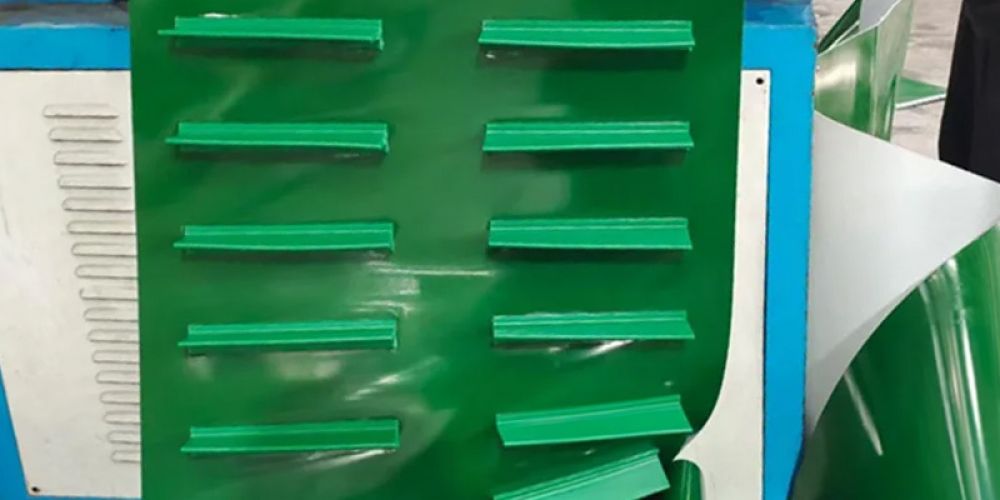
There are significant differences between industrial light conveyor belts and ordinary light conveyor belts in many aspects. These differences are mainly reflected in application scenarios, materials and structures, performance requirements, and prices.
(1)Industrial light conveyor belt:
◦ Mainly used in material handling and transmission in industrial automation and production lines.
◦ Commonly used in industrial fields that require high-precision and high-efficiency transmission such as food processing, electronic manufacturing, wood processing, and photovoltaic industries.
(2)Ordinary light conveyor belts:
◦ They have a relatively wide range of applications, but usually do not involve highly automated industrial production environments.
◦ Commonly used in logistics warehousing, packaging, light material handling and other scenarios.
(1) Industrial light conveyor belt:
◦ The material is mostly made of polymer materials, such as PVC, PU, etc., to meet performance requirements such as wear resistance, oil resistance, acid and alkali resistance, etc.
◦ The structure may include multiple layers of design, such as cladding, skeleton layers, bottom layers, etc., to ensure strength and stability.
◦ Special joint methods may be required, such as bevel grinding, tooth welding, etc., to meet the needs of ring use.
(2) Ordinary light conveyor belt:
◦ The material may be relatively simple rubber or synthetic materials.
◦ Relatively simple in structure and may consist of only one or two layers of design.
◦ The joint method may be relatively simple, such as direct lap joint or nail-button lap joint.
(1) Industrial light conveyor belt:
◦ It has high requirements on accuracy, stability, wear resistance, corrosion resistance, etc.
◦ Need to meet performance standards in specific industrial environments, such as food-grade safety standards, anti-static standards, etc.
(2) Ordinary light conveyor belts:
◦ Relatively low performance requirements, mainly meeting basic material handling and transmission needs.
◦ May not be required to meet specific industry standards or regulatory requirements.
4. Price
(1) Industrial light conveyor belt:
◦ Due to differences in materials, structures, performance requirements, etc., the price of industrial light conveyor belt is usually higher.
◦ But its high efficiency, stability and durability make it highly cost-effective in long-term use.
(2)Ordinary light conveyor belts:
◦ The price is relatively low and suitable for scenarios with limited budget or uncomplicated material handling needs.
◦ However, its lifespan and performance may not be as good as industrial lightweight conveyor belts. To sum up, there are significant differences between industrial light conveyor belts and ordinary light conveyor belts in terms of application scenarios, materials and structures, performance requirements, and prices. Which type of conveyor belt you choose depends on your specific material handling needs and budget constraints.
.jpg)
Skirted baffle conveyor belts are a special type o…
.jpg)
Polyurethane (PU) conveyor belts possess numerous …
The safety of conveyor belt materials in the food …
Lightweight conveyor belts are a type of conveyor …
